Sunday, February 1, 2015

Which technique, high SMAS or lateral SMASectomy, provides the most improvement or lift of the cheeks?

Question from  North Carolina, NC: When choosing between two different surgeons, each with a different preferred surgical technique, which will provide the best lift of the cheeks: high SMAS or lateral SMASectomy? I am NOT interested in fillers or fat transfer to augment the cheek area but would rather have a lift that will address the cheeks. Thank you!

Answer from Dr. Dean Kane, Board Certified Plastic Surgeon from Baltimore:  
​I LOVE facelifts because of the uniqueness of every patient and the variation of the anatomy! 

​If fillers and fat grafting is left out of the equation, a Midface Lift is your best option to lift and fill the cheeks. As I perform them, a lower eyelid incision is made and depending on the tissues to be lifted, the cheek will be suspended straight up to the inferior orbital rim.

​As you have found out there are different proponents for many SMAS lift variations. Some say imbricate at a medium or high cheek plane; some say lift and suspend in front and behind the ear; some say pull tight, cut off the excess and sew to the opposing edge. 

​For maximum advancement of the jowl to the cheek deficit, I find a high SMAS imbrication is very straight forward and best option to achieve a youthful appearance. It also lifts the jowl, the platysma and the attached neck soft tissues.

​For maximum jowl and neck elevation from the facelift incision, a SMAS elevation and advancement in front of and behind the ear works well.

​Lateral SMASectomy similarly lifts the jowl and tightens the soft tissue upward and outward but excises the redundant tissue which can be used to augment the cheek. 

​I find that SMAS lifting will not fully address the youthful medial upper cheek; ie., the nasal half of the cheek "apple" just below the eyes. I therefore perform fat grafting from any liposuctioned fat I have contoured from the jowls, jawline and neck. You may also consider fillers such as Voluma. 

This of course only addresses one of many decisions made for customizing a facelift to the individual patients face and neck.

​​This was a great question. I hope I was helpful. 

Thursday, January 29, 2015

A friend had a facelift where the scars were hidden inside of her ears. Some time later I noticed that it looks like her ears are being turned inside out! The scars were hidden in the tragus and now they are sticking out of her ears!

Question from Henderson, NV: A friend had a facelift where the scars were hidden inside of her ears. Some time later I noticed that it looks like her ears are being turned inside out! The scars were hidden in the tragus and now they are sticking out of her ears! This was done by prominent and well-respected Las Vegas female plastic surgeon! Is it better then, to have the scar placement in front of the ears?

Answer from Dr. Dean Kane, Board Certified Plastic Surgeon from Baltimore:  
​Every patient is different and so is the healing process. It is most unusual to hear of a hidden tragal incision creating a deformity. 

​Many well accomplished surgeons are placing the facelift incision along the edge of the tragus to hide the prior generations stigmata of a scar in front of the ear and skin color and skin texture contrast of the cheek and ear skin.

​When a incision is closed tightly or should there be a swelling concern during the healing phase, the scarring process under the skin in front of the tragus may pull the cartilage out and expose the scar.

​I would still recommend this incision for most facelift incisions unless there is another reason not to do it. 

​I hope this is helpful! All the best!

Is it ok to conduct open rhinoplasty under local anesthesia?

Question from "is it ok to conduct open rhinoplasty under local anesthesia?": I have had 4 consultations: 7yrs, 7yrs, 10yrs, and 26yrs (experience of each dr.)Two stated iv sedation, one stated general anesthesia. The 26yr doctor stated local. He stated too much risk with iv and general., I guess from experience? He would have me on ambiean, Valium etc.. 1.5 -2hr it will take. The 26yr doctor said i have a on a scale of 1-10 difficulty of doing , would be a 4. The other doctors said difficulty, and it would be an 8. Why would this doctor of 26yrs be so confident he can conduct rhinoplasty under local anesthesia?

Answer from Dr. Dean Kane, Board Certified Plastic Surgeon from Baltimore: 

Dear "is it ok to conduct open rhinoplasty under local anesthesia?"

Yes, but it may not be your safest option. Rhinoplasty surgery requires skill and finesse, particularly in an area of the body where you breathe. With rhinoplasty under local anesthesia, you will hear (music, conversation), feel (not pain necessarily but pushing, pulling, banging) and may not be properly monitored. Should there be bleeding or active secretions or changes in your heart or breathing vital signs, your surgeon will require the skills to multi-task beyond the talents of a nose surgeon.

Most of my rhinoplasty surgery is performed under General Endotracheal Anesthesia to protect the airway and have a select anesthesia provider provide the best experience and safety for your welfare.

Below is an opinion article from the American Society of Aesthetic Plastic Surgery discussing the virtues and concerns of different anesthetics.

I hope this is helpful. All the best!


Dean Kane, MD, FACS

Local Anesthesia and Plastic Surgery: Marketing or Reality?
December 9, 2014


Local Anesthesia and Plastic Surgery: Marketing or Reality?
• The following article by Heather J. Furnas MD is added to the www.DrDeanKane.com website because it is a timely and important opinion which I would like to make available to any patient interested in Dean Kane, MD, FACS’s services
An increasing number of patients ask to have their surgery done with local anesthesia “because it’s safer.” Guess what? That isn’t always the case.
Plastic surgery procedures tend to have clever names: Mommy Makeover, Insta-Boob, Cinderella Surgery... but the operative (no pun intended) word here is surgery. All of the above-referenced procedures are invasive; in the example of the Mommy Makeover, it can include several procedures to achieve the desired result. That means at some point, your body is cut open so the operation can be performed. The Mayo Clinic has weighed in on the use of general anesthesia, explaining it should be considered if your operation:
• Takes a long time
• Exposes you to a cold environment
• Affects your breathing, such as chest or upper abdominal surgery.
They also state that: “Most healthy people don't have any problems with general anesthesia. Although many people may have mild, temporary symptoms, general anesthesia itself is exceptionally safe, even for the sickest patients. In general, the risk of complications is more closely related to the type of procedure you're undergoing, and your general physical health, than to the anesthesia itself.”
So why aren’t patients asking for it? Two reasons come to mind. The first is the need for additional information about the procedure, including any risks or complications that could potentially arise.
This we can provide.
The second is more disturbing, because it seems to correlate with the increasing number of doctors who aren’t plastic surgeons, but who perform cosmetic surgeries learned at weekend courses taught by other non-plastic surgeons.
This we have to fix.
The main selling point for their practice is that they do plastic surgery “under local anesthesia.”
Love the Local Anesthesia–Too Bad It Was the Wrong Procedure!
The problem with choosing a specific procedure solely because it can be done under local anesthesia is that your surgeon may not be offering you the correct procedure or the safest path to your desired result. Why? Because that doctor may not know how to do it.
If a doctor can only do liposuction under local anesthesia, but you need a tummy tuck, he may tell you liposuction is your only safe option. We see many patients who are unhappy after a non-plastic surgeon left them with loose, lumpy skin. They lost time and money, and they still need a tummy tuck to address their specific concerns.
Mini Tummy Tuck and the Sad-Faced Belly Button
Similarly, many doctors perform “mini tummy tucks” under local anesthesia “because it’s safer,” even on patients who need full tummy tucks under general anesthesia. Those patients consult with us, wondering why their belly button is pulled down and their tummy still bulges. They received the local anesthesia they wanted, but they also received the wrong operation.
Drooping Breasts Don’t Lift Themselves
Patients wanting a breast lift often come to us after a non-plastic surgeon gave them breast implants. The patient had the “safe operation under local anesthesia” because the initial doctor didn’t know how to perform a breast lift. Patients come to us to find out if their breasts can be fixed.
Why Would a Doctor Use Only Local Anesthesia?
If a doctor only promotes local anesthesia, ask yourself these questions:
•Is the doctor a board-certified plastic surgeon who operates in an accredited operating room and has hospital privileges?
• Is he/she fully experienced in all aesthetic procedures of the face and body?
• Does he/she only offer local anesthesia because an anesthesiologist won’t come to an office without an accredited operating room?
• Is it better to have the wrong operation under local anesthesia than the correct one under general anesthesia?
Local anesthesia is cheaper and is generally safe, but it’s not infallible. Even without sedation, fatalities can result from toxic levels of local anesthesia, limiting how much can be safely done.
Do You Want the Best Procedure or the One Done under Local?
All board-certified plastic surgeons are trained to do procedures under general anesthesia as well as local anesthesia with and without sedation. As board-certified plastic surgeons, we won’t offer you the incorrect procedure under the guise of “safety” because we don’t know how to do the correct one.


Protect yourself, and ask questions.

Can Botox help for Bell's Palsy?

Question from Toronto, ON: Hello I have had Bell's palsy since I was young and was wondering if Botox can help with the problems, thank you.

 Answer from Dr. Dean Kane, Board Certified Plastic Surgeon from Baltimore:
So sorry for your Bell's Palsy! I hope you resolve completely. 

Yes, Botox and other options may help but not necessarily in a way you might think. 
1. Using Botox on the active muscles of the weaker side might allow the weaker muscles to contract better unopposed.
2. Using Botox on the normal right side may achieve a more even and symmetrical appearance with that of the affected side.
3. You may also consider fillers to provide volume and lift on the affected side. 
4. Laser and chemical peel tightening may be helpful as well.

In all options, please consult with a well experienced Board Certified Plastic Surgeon, ENT or Neurologist with the art, skills and talent to use these techniques.

I wish you the best! 

I am seeking advice as to the success of an endotine device as opposed to regular sutures. Any thoughts?

Question from Long Island, NY: A doctor whom I have consulted uses: "the endotine midface device instead of non-absorbable sutures in mid-facelifts, lowering the risk of skin irregularities, dimpling and swelling and reducing procedure time. Once implanted, the device holds the lifted tissues in place as they complete the process of reattaching to the cheekbones. The device is then absorbed into the body until it is completely dissolved." What is your opinion?

 Answer from Dr. Dean Kane, Board Certified Plastic Surgeon from Baltimore:

​Thanks for this interesting question!  

​The Midface Lift is a cheek lift to rejuvenate the aging and sagging soft tissues of the upper cheek and unfold the trough of the nasolabial fold. It is also useful in rejuvenating the tear-trough and the separating cheek-eyelid junction.

A Midface Lift can be performed at 2 different tissue levels from a variety of incisions according to the surgeons skill and what tissues are desired to be advanced. 

​Eyelid incision: this is a common incision to perform a lower blepharoplasty (eyelid lift) and fill the hollow of the tear-trough and cheek-eyelid junction with the fat chambers of the upper cheek. When this flap of fatty tissues is extended, it will unfold the furrow of the nasolabial fold. I use absorbable sutures along the orbital rim periosteum to suspend these tissues and if required a non-absorbable suture to suspend the corner eyelid if there is concern of pulling or rounding of the eyelid. Endotine, a absorbable device placed through a temple incision can be used to hold these soft tissues in place similarly to sutures.

​Sub-periosteal incision: this approach allows elevation of the muscles as well as the fatty soft tissues of the cheek through a temple and/or intraoral incision. It is most commonly held in place with a Endotine device or barbed-thread.

​Any suspension device, whether it be sutures, Endotine or barbed thread must last long enough for the normal process of scar to hold the advanced tissues in place until healed. 

​It is best to compare this surgeons evaluation of what tissues to lift and what techniques he / she are comfortable performing and recommendations with one or more well experienced, Board Certified Plastic or Facial ENT Surgeons. 

​I hope this has helped. All the best. 

I am going for a Tummy Tuck next month. I work as a critical care nurse.

Question from Ontario, ON: Is it realistic for me to believe that I am to return to work two weeks post op?

Answer from Dr. Dean Kane, Board Certified Plastic Surgeon from Baltimore:
The simple answer is no. Every surgeons tummy tuck is not the same and there are numerous considerations:

1.    Absorbable sutures and skin adhesives are (on average) 50% dissolved at 2 weeks.
2.    ​The scar strength from collagen formation at the incision and under the skin flap is minimal at 2 weeks.
3.    ​Your age and nutrition.
4.    Are you a care-giver for other people in your home or else where?
5.    ​How tight (ie, how much skin will be removed) and how bent over will you be for the healing process.
6.    ​Will your fascial girdle be tightened?
7.    Is there a hernia or diastasis to repair?
8.    ​Will you be adding lipo-contouring?
9.    ​Are you prepared for a complication and how will this affect your timing and recovery?
10.  ​Will your work environment include lifting, bending, pushing, pulling? How about contamination from other personnel or patients?
11.  ​and other issues to consider.

Please review your concerns with your surgeon. Stressing yourself to recover will only prolong the recovery.

​All the best!

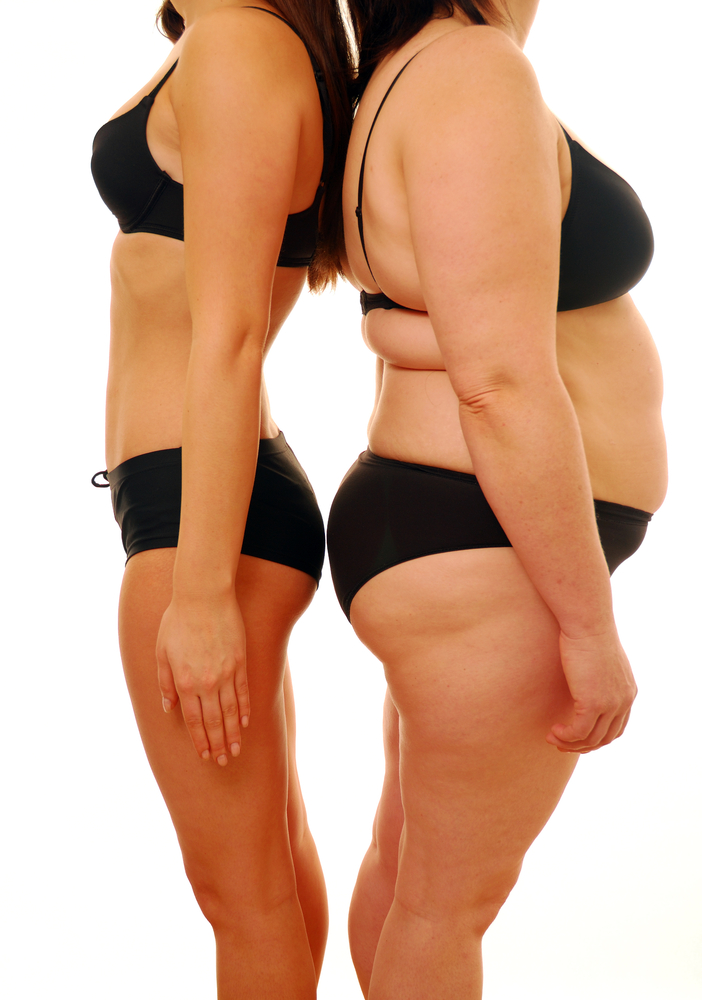
How soon can I have abdominoplasty after having gastric bypass. Stomach is really flabby.

shutterstock_51858520Question from Alabama, AL: How soon can I have abdominoplasty after having gastric bypass. Stomach is really flabby.

 Answer from Dr. Dean Kane, Board Certified Plastic Surgeon from Baltimore:
Congratulations on your journey to weight loss and "improved" health. Unfortunately, it leaves a lot of skin behind that does not tighten and must be removed. 

​It is generally recommended to wait 1 year to lose and stablize your weight prior to beginning the skin reduction process. You will also need to optimize your nutrition to reduce the risk of break-down complications. 

There are various options for tummy recontouring following massive weight loss. 
These options are dependent on your skin laxity and the areas of liposuction contouring you wish or need.

You can consider:

1.    a traditional tummy tuck where the ab muscles are tightened, the sides are liposuction contoured, the excess skin is removed, the mons lifted and a new belly button is created.
2.    a panniculectomy / lipo-sculpting where the large lower roll of tummy skin is removed and the upper tummy and sides and / or back are reduced with liposuction.
3.    a body lift used with patients who have super-skin excess and the tummy, sides and back skin are lifted with or without muscle tightening.
4.    liposuction of the circumferential trunk for body contouring.

Please consider a well experienced, Board Certified Plastic Surgeon to evaluate your needs and consider these options with you.

​All the best!